
TL;DR
TL;DR
TL;DR
As an Associate Designer, I worked with the team lead on Blackboard, an internal EdTech solution for LMS content management and student success tracking. In a 2‑month design cycle, I built the foundational design system and components, created wireframes, prepared research documents, and conducted 10 user interviews with LMS administrators to uncover pain points. I also designed dashboard visualizations to help educators monitor performance and refine content. My contributions ensured design consistency and clarity, supporting delivery of a tailored, functional solution.
Impact: After development, the Blackboard admin tool was actively used over a 4‑month period by 15 internal teams spanning different user roles and we recorded an increase
in Operational Performance and Student Progress Monitoring, and later tested with external EdTech companies exploring a switch to new LMS management systems validating its adaptability and broader market interest.
Reflection & Learnings: As an Associate Designer working on Blackboard in 2022, this project taught me the importance of consistency through design systems — how reusable components can streamline collaboration and improve user experience.
Looking back, I recognize areas where we could have improved: adding breadcrumbs for better navigation, prioritizing accessibility, and using clearer terminology for certain internal features. While these naming conventions worked for internal teams, refining them would have enhanced usability for broader audiences. These learnings continue to shape how I approach clarity, inclusivity, and scalability in my design work.


Problem
Problem
Problem
Online education has surged by 300% in the past five years, with nearly 50 million learners worldwide. Yet in Africa, and especially Nigeria where our project began, educators and administrators were still struggling with fragmented LMS tools. Uploading content, tracking course performance, and measuring student success often meant juggling spreadsheets, multiple dashboards, and inconsistent reporting systems. Students, meanwhile, faced unclear progress tracking and limited feedback loops, leaving them disconnected from their own learning journey.
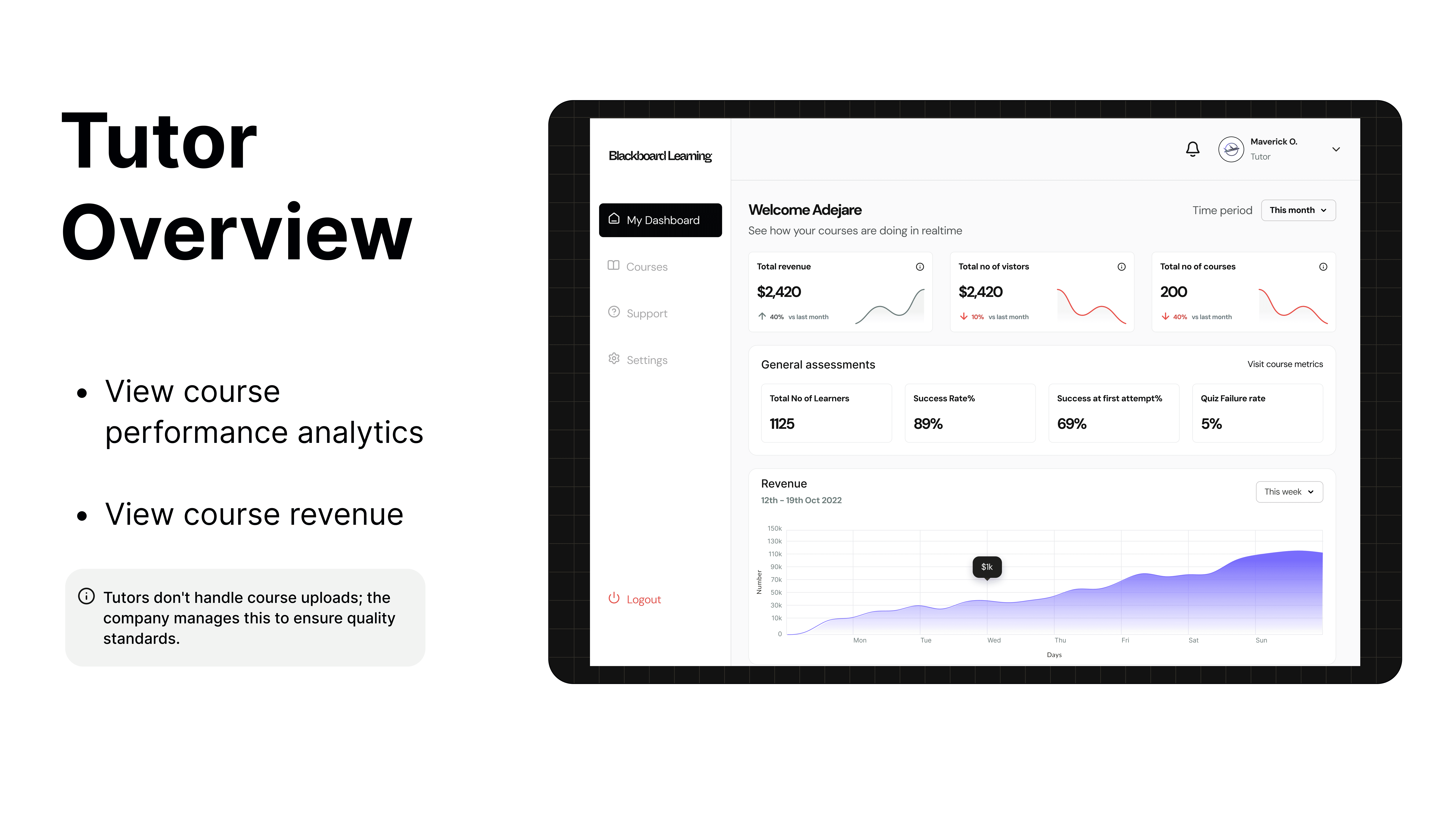
Blackboard was conceived under the guidance of EdTech leaders, who helped us define what educational ROI should look like for administrators and institutions. Their input clarified the different user roles we needed to design for: administrators who upload and manage content, and tutors who may not handle uploads but still need visibility into how their courses are performing.
To ground these assumptions, our team reviewed notes from LMS forums and communities, then conducted 10 interviews with experienced administrators across different platforms. These early insights gave us a clear picture of the inefficiencies users faced and the expectations they had, laying the foundation for our research strategy and design decisions
Research Strategy
Research Strategy
Research Strategy
Building on the problem space, we defined our initial assumptions from stakeholder requirements, framed key research questions, and validated them through user interviews and analysis.

Assumptions (from stakeholder requirements before research)
Blackboard would serve as a central platform to bring courses from different tutors into one place.
Tutors would not upload content directly; instead, the Blackboard team would record sessions with tutors to ensure quality and consistency.
Admins would handle uploading and assigning courses to registered tutors, maintaining control over content flow.
Tutors would then have visibility into course performance — seeing how students engaged, what earnings they generated, and what adjustments were needed.
Educational ROI would be measured not only by student success metrics but also by tutor performance and content quality.
Research Questions
What has been the experience of administrators using LMS systems in the past?
How easy or difficult is it to manage tutor roles and responsibilities without inefficiencies or duplication of effort?
What challenges do tutors face when tracking course performance and earnings?
How do students and institutions define success and ROI in digital learning environments?
What features or workflows are most critical to ensure adoption in African EdTech contexts?
Research Findings
Admins valued centralized control: They preferred systems where they could manage uploads and assignments, reducing errors and ensuring quality.
Tutors wanted transparency: Visibility into course performance and earnings was a major motivator, helping them refine content and teaching approaches.
Students needed clarity: Learners benefited from dashboards that showed progress and outcomes, which improved engagement and accountability.
Role management was a pain point: In existing LMS platforms, overlapping responsibilities often led to confusion; separating admin uploads from tutor visibility solved this.
ROI metrics were often missing: Institutions struggled to measure educational return; integrating performance tracking and success indicators was seen as a differentiator.
African context mattered: Many global LMS platforms felt too generic; localized solutions that reflected regional needs (like bandwidth constraints and tailored dashboards) were more appealing.
Role Mapping & Importance

Super Admin → Oversaw course uploads, assignments, and overall platform management. This role ensured centralized control and consistency across the LMS.
Quality Assurance → Reviewed recorded tutor content before upload, guaranteeing that only high‑quality, standardized materials entered the system. This safeguarded educational ROI by maintaining content integrity.
Tutors → Focused on teaching and monitoring outcomes. While they didn’t upload content, they had visibility into how their courses performed, student engagement levels, and earnings — enabling them to refine their approach
From our research and stakeholder inputs, we mapped the platform’s responsibilities into these three core roles. Separating these roles reduced inefficiencies, clarified responsibilities, and aligned with stakeholder goals of ensuring quality content while empowering tutors with actionable insights.
Methodology
We conducted 10 user interviews with LMS administrators across different platforms, analyzed community forum notes, and synthesized stakeholder input from EdTech leaders. This mixed‑methods approach gave us a balanced view of both systemic inefficiencies and user expectations, ensuring our design strategy was grounded in real needs and informed assumptions.
Building on the problem space, we defined our initial assumptions from stakeholder requirements, framed key research questions, and validated them through user interviews and analysis.
Assumptions (from stakeholder requirements before research)
Blackboard would serve as a central platform to bring courses from different tutors into one place.
Tutors would not upload content directly; instead, the Blackboard team would record sessions with tutors to ensure quality and consistency.
Admins would handle uploading and assigning courses to registered tutors, maintaining control over content flow.
Tutors would then have visibility into course performance — seeing how students engaged, what earnings they generated, and what adjustments were needed.
Educational ROI would be measured not only by student success metrics but also by tutor performance and content quality.
Research Questions
What has been the experience of administrators using LMS systems in the past?
How easy or difficult is it to manage tutor roles and responsibilities without inefficiencies or duplication of effort?
What challenges do tutors face when tracking course performance and earnings?
How do students and institutions define success and ROI in digital learning environments?
What features or workflows are most critical to ensure adoption in African EdTech contexts?
Research Findings
Admins valued centralized control: They preferred systems where they could manage uploads and assignments, reducing errors and ensuring quality.
Tutors wanted transparency: Visibility into course performance and earnings was a major motivator, helping them refine content and teaching approaches.
Students needed clarity: Learners benefited from dashboards that showed progress and outcomes, which improved engagement and accountability.
Role management was a pain point: In existing LMS platforms, overlapping responsibilities often led to confusion; separating admin uploads from tutor visibility solved this.
ROI metrics were often missing: Institutions struggled to measure educational return; integrating performance tracking and success indicators was seen as a differentiator.
African context mattered: Many global LMS platforms felt too generic; localized solutions that reflected regional needs (like bandwidth constraints and tailored dashboards) were more appealing.
Role Mapping & Importance
Super Admin → Oversaw course uploads, assignments, and overall platform management. This role ensured centralized control and consistency across the LMS.
Quality Assurance → Reviewed recorded tutor content before upload, guaranteeing that only high‑quality, standardized materials entered the system. This safeguarded educational ROI by maintaining content integrity.
Tutors → Focused on teaching and monitoring outcomes. While they didn’t upload content, they had visibility into how their courses performed, student engagement levels, and earnings — enabling them to refine their approach
From our research and stakeholder inputs, we mapped the platform’s responsibilities into these three core roles. Separating these roles reduced inefficiencies, clarified responsibilities, and aligned with stakeholder goals of ensuring quality content while empowering tutors with actionable insights.
Methodology
We conducted 10 user interviews with LMS administrators across different platforms, analyzed community forum notes, and synthesized stakeholder input from EdTech leaders. This mixed‑methods approach gave us a balanced view of both systemic inefficiencies and user expectations, ensuring our design strategy was grounded in real needs and informed assumptions.
Screens
Screens
Screens




Conclusion
Conclusion
Conclusion
Outcomes
Reduced Administrative Workload: Cut down administrative workload by 20%, allowing tutors to focus more on teaching and student interaction
Increased Operational Performance: Achieved a 40% increase in overall operational performance, streamlining processes and improving efficiency.
Improved Data Accuracy: Enhanced data accuracy by 40%, ensuring reliable performance tracking and reporting
Take aways
Looking back, I recognize areas where we could have improved: adding breadcrumbs for better navigation, prioritizing accessibility and using clearer terminology for certain internal features. While these naming conventions worked for internal teams, refining them would have enhanced usability for broader audiences. These learnings continue to shape how I approach clarity, inclusivity, and scalability in my design work.

